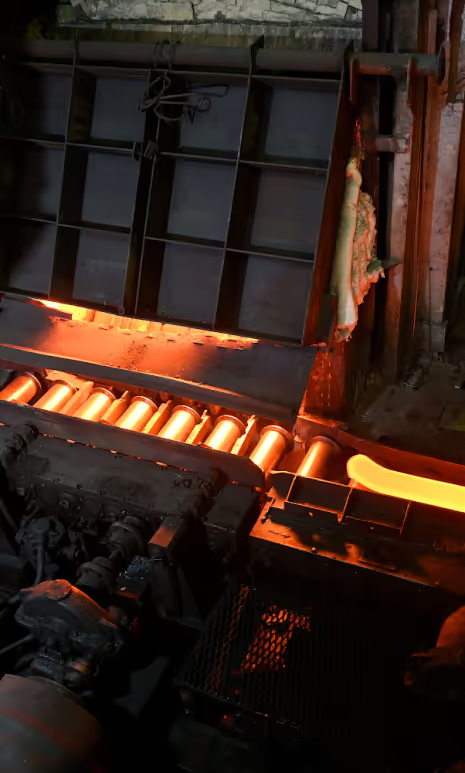
Электротехнический лист (электротехническая сталь) — это специализированный магнитно-мягкий сплав железа с кремнием, разработанный для применения в электромагнитных полях. Главная задача этого материала — эффективно проводить магнитный поток, минимизируя при этом потери электроэнергии на рассеивание и нагрев.
От качества электротехнического проката напрямую зависит коэффициент полезного действия (КПД) любого электрооборудования: от крошечных шаговых двигателей в смартфонах до гигантских турбогенераторов гидроэлектростанций.
В мировой металлургии весь электротехнический листовой прокат делится на два фундаментальных класса в зависимости от внутренней кристаллической решетки:
Ключевым легирующим элементом сплава является кремний, содержание которого варьируется от 0,5% до 4,5%.
Введение кремния решает важнейшую физическую задачу: оно резко повышает удельное электрическое сопротивление феррита. Когда магнитопровод пронизывает переменное магнитное поле, в нем возникают паразитные вихревые токи (токи Фуко), разогревающие металл. Высокое сопротивление кремниевой стали «тормозит» эти токи, снижая тепловые потери.
Однако металлургический процесс имеет жесткое ограничение: при концентрации кремния выше 4% сталь становится хрупкой, что делает её холоднокатаную обработку и тонкую штамповку крайне трудоемкой задачей. Содержание углерода в готовом листе сводится к абсолютному минимуму (менее 0,005%), чтобы исключить эффект «магнитного старения» — деградации свойств с течением времени.
При проектировании магнитопроводов инженеры опираются на три базовых параметра электротехнического листа:
Закупщики и конструкторские бюро часто сталкиваются с необходимостью пересчета зарубежных спецификаций на отечественные стандарты. Основные таблицы соответствия выглядят следующим образом:
Марка по ГОСТ 21427.2 Стандарт EN 10106 (Европа) Стандарт ASTM A677 (США)Типовое применение 2013, 2212 M600-50A / M700-65AM-43 / M-47 Двигатели бытовой техники, дроссели 2412, 2414 M400-50AM-36 Промышленные асинхронные моторы
Марка по ГОСТ 21427.1 Стандарт EN 10107 (Европа) Стандарт ASTM A876 (США) Типовое применение3411, 3413 M140-30S / M150-35SM-5 Масляные и сухие силовые трансформаторы 3404, 3405 M130-27SM-4 Высокочастотные и измерительные приборы
Примечание к маркировке ГОСТ: первая цифра «2» обозначает изотропную сталь, «3» — анизотропную; вторая цифра — процент содержания кремния (например, «4» = от 2,8 до 3,8%).
Чтобы собранный из листов сердечник не работал как единый монолитный проводник, пластины необходимо электрически изолировать друг от друга. Электротехнический лист поставляется со специальными покрытиями:
Ввиду повышенной твердости кремниевого проката, вырубка пластин сложной геометрии приводит к ускоренному износу пуансонов. Для опытных партий и высокоточных приборов применяют лазерную резку с последующим снятием кромочных напряжений путем кратковременного низкотемпературного отжигом.
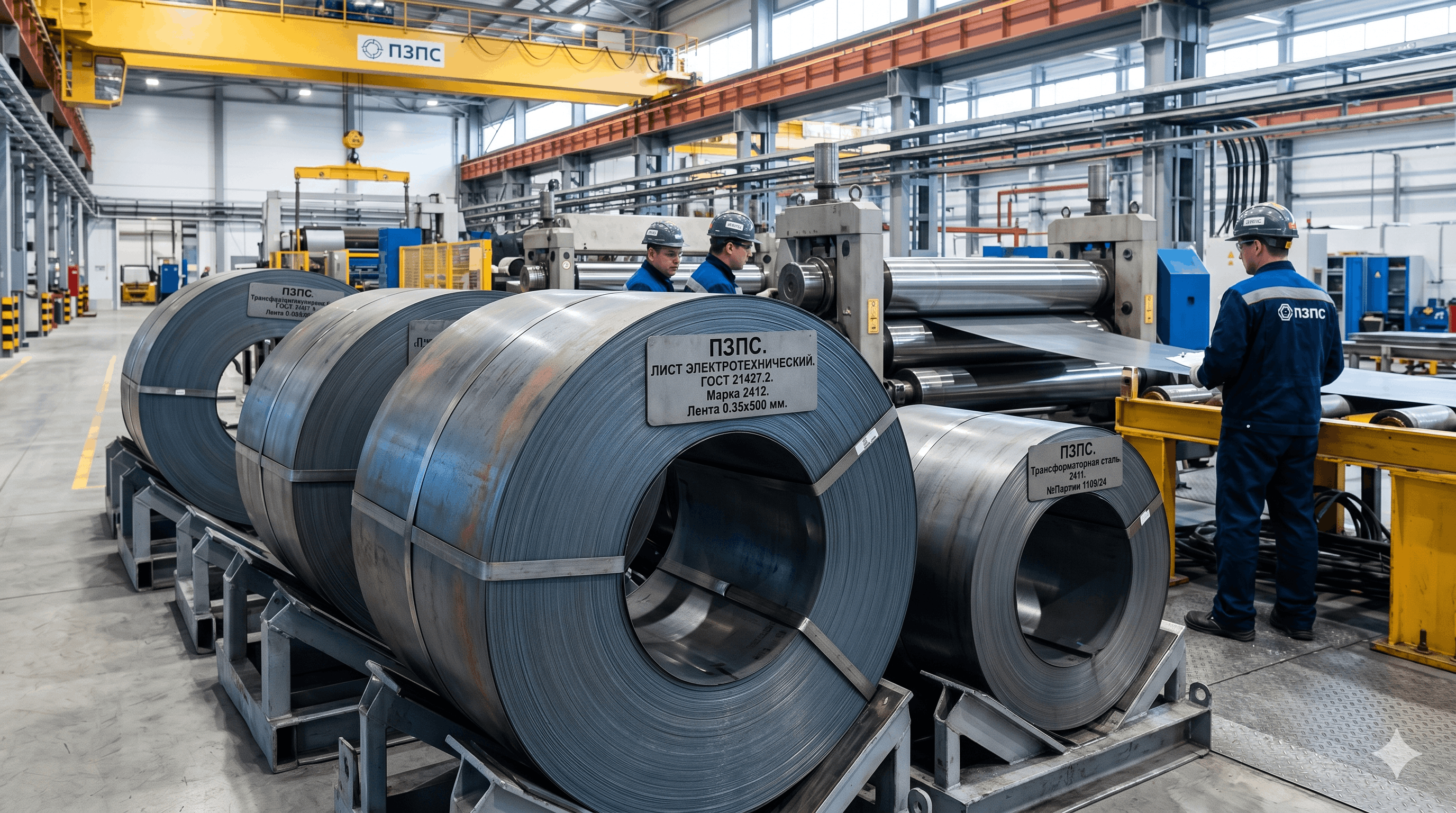
Петербургский завод прецизионных сплавов (ПЗПС) осуществляет поставку холоднокатаного листового и ленточного проката со строго контролируемыми геометрическими и магнитными допусками.
Преимущества работы с ПЗПС:
Для получения технической консультации, заказа бесплатных образцов или расчета стоимости партии электротехнической стали под ваше ТЗ, свяжитесь с отделом продаж ПЗПС через форму обратной связи ниже или по телефону +7 812 740-76-87.